Parking lot striping in Greenville, SC
A practical guide to commercial lot striping and pavement markings
Most property managers ask the same question first: how do I know it is time to restripe? This page explains what parking lot striping work usually involves, how restriping differs from a new layout, what an independent provider tends to look at before quoting, and how to prepare a request that gets a useful answer.
When a commercial lot usually needs striping again
Striping ages with traffic, sun and weather. The signs are usually easy to spot: stall lines that read as faint grey instead of white, edge lines broken by tire wear, arrows and stencils you can no longer read from a moving vehicle, hatched no-parking areas worn through, and markings that no longer match the way people actually park.
On newer pavement the first full layout usually arrives with the asphalt work itself. After that, most lots are re-marked well before the asphalt is replaced. It helps to think of striping as a visibility and organization item rather than a pavement repair: if the surface has failed, with cracking, raveling or standing water, fresh paint will not fix it, and a provider may tell you the pavement needs attention first.
Restriping an existing layout vs. striping a new layout
Restriping keeps the layout you already have — same stalls, same drive aisles, same direction of travel. It is the more common request and usually the simpler one, because the geometry is already settled and the work is largely about painting it back cleanly.
New layout striping means markings are being set for the first time, or the layout is changing: adding compact spaces, re-working a drive aisle, converting a delivery area, or rethinking parking around a new tenant mix. That work starts with measurement and layout rather than paint, and it is where your input matters most — where vehicles actually enter, how deliveries flow, where people cut across the lot, and where you want customers to end up. Layout changes also touch accessible spaces, fire lanes and traffic direction, so it is worth settling before anything is painted.
What a site assessment typically considers
A careful provider usually walks a lot before quoting it. The same handful of questions tends to come up:
- How many spaces exist, and what the mix is — standard, compact and van-accessible
- Where accessible spaces sit relative to an accessible route and an entrance
- Which areas are fire lanes, no-parking zones, loading or service areas
- Drive aisle direction, one-way flow, stop bars and crosswalks
- Existing stencils and signage that may need to be refreshed
- Surface condition, cracks and whether paint will hold on the pavement
- When the lot can be closed or partially closed without disrupting business
We do not perform assessments and we do not inspect properties. This list exists so you know what to expect from an independent professional.
Surface preparation before paint goes down
How long paint lasts depends heavily on what happens before the striper starts. Dust, dirt, oil, loose aggregate, moss in the joints and surface moisture all reduce how well paint bonds to pavement.
A provider may plan to clean or blow off the surface, mark out the layout with string or chalk, and schedule around dry pavement and workable temperatures. On some lots, old paint is removed or covered rather than painted over, so the new lines read cleanly. In practice, weather and surface moisture drive scheduling more than anything else, which is why a date sometimes moves by a day or two.
Scheduling the work around traffic
Few commercial lots can be closed for long. Providers commonly phase the work, stripe a portion at a time, or work early in the morning, overnight or on a weekend. If you know your busy hours, lease requirements, trash pickup days or a scheduled event, put it in the request — that detail is often what decides whether a project runs smoothly or frustrates every tenant on site.
Markings and stencils that usually get specified
A striping scope rarely stops at stall lines. It commonly includes drive aisle edge lines, arrows, crosswalk blocks, stop bars, hatched no-parking and access aisles, painted curbs, loading zone markings, directional text, stencils, and numbers or identifiers where a property uses them.
Line thickness, paint type and color scheme vary by property and by what the owner wants the lot to look like. Warehouse and industrial buildings often add interior floor markings: aisle lines, walkways, staging areas and safety zones.
Accessibility markings: what we can and cannot tell you
Accessible parking markings are one of the most common requests we receive, and they are also where property managers need to be most careful. How many accessible and van-accessible spaces are needed, where they are placed, how access aisles are marked and what signage is required come from accessibility rules and local codes — not from this website.
We do not provide legal or compliance advice and we cannot tell you whether a given lot complies with anything. Independent providers are responsible for evaluating the requirements that apply to a property, and the owner or manager is responsible for confirming that finished work meets whatever requirements apply. What we can do is make sure a request clearly says accessible markings are involved, so the right professional is matched to it.
What happens after you submit a request
Tell us about the property, the markings you need and the timing you have in mind. We review the request, and when a suitable independent local professional is available we may connect it so they can follow up with you directly.
There is no fee to submit, we do not set or guarantee pricing, and we cannot guarantee that a provider is available for your property, area or timeframe.

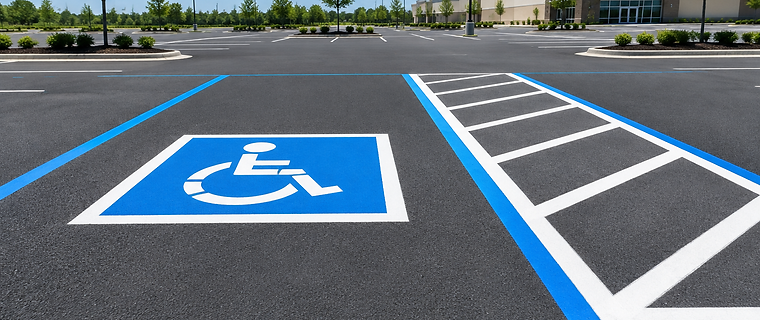
Accessible stall markings and access aisles are one of the most common commercial striping requests. We do not evaluate compliance.
Common questions
Ready to describe your lot?
Submit the property type, the markings involved, an approximate lot size and your timing. There is no fee to submit, and we will review the request.
Request a Striping QuoteIndependent referral service disclosure
Greenville Striping Connect is an independent referral and lead-generation service. We are not a striping, paving, or asphalt contractor and do not perform construction or pavement-marking work. Any provider you choose to hire is an independent business responsible for its own licensing, insurance, pricing, estimates, workmanship, compliance obligations, and warranties.